Commercial cleaning and food hygiene professionals in Brampton support restaurants, food centers, bakeries, warehouses, and food service operations staying compliant. They decontaminate high-contact points, food contact areas, equipment, floors, drains, restrooms, and food handling spaces using certified products, at correct dilution, and documenting contact times. You require regular sanitation based on risk, volume, food allergies, and inspections, along with documented proof backing HACCP, quality reviews, and regulatory adherence. The sections below explains how effective cleaning systems should include.
Key Takeaways
- Sanitation technicians in Brampton support restaurants, grocery departments, commissaries, warehouses, bakeries, schools, mobile vendors, and allergen-sensitive operations.
- Cross-contamination prevention is accomplished by sanitizing frequently contacted areas, food-contact equipment, kitchens, floors, drains, restrooms, and storage areas with area-specific procedures.
- Confirmation of proper chemical concentration, alignment, and contact time is executed by trained providers, with finishing recorded using swabs, inspections, and remedial documentation.
- Effective sanitation schedules take into account hazard, production volume, transitions, releases, and regulations when distributing routine, periodic, and periodic tasks by section.
- Contractors need to exhibit HACCP, public-health competency, safety training instruction, liability, credentials, coded equipment, and assessment-ready maintenance records.
Food Safety Cleaning Requirements for Brampton Facilities
Brampton venues that manage, store, prepare, package, or offer food require food sanitation. Implement it if your establishment is covered by health reviews, food regulations, or HACCP protocols. The requirement covers food venues, break rooms, supply centers, retail departments, butcheries, seafood areas, stores, and facility food prep.
You also need proper hygiene cleaning in distribution centers, food processing plants, freezer facilities, commercial bakeries, educational nutrition programs, event spaces, and catering hubs. Mobile and seasonal operations count too, including mobile kitchens, festival sellers, and temporary food stands. If your staff prepare raw materials, portion finished foods, warm up meals, or maintain allergen storage, your facility needs recorded sanitation procedures. In Brampton, hygiene isn't optional; it's part of statutory, business, and public health compliance.
What Do Brampton Cleaning Experts Clean?
You require experienced cleaning professionals who sanitize frequently touched areas, cooking areas, flooring, and restroom facilities to ensure compliance with food safety and health standards. These locations are prioritized because they carry the greatest contamination risk, falling hazards, and regulatory breaches.
Understanding their cleaning procedures enables you to validate your facility's cleaning meets required standards and regulations.
Disinfecting High-Touch Zones
Expert Brampton cleaners recognize that high-touch surfaces require sanitizing since these areas contain bacteria, viruses, and food residue. You should establish a documented schedule for cleaning door handles, push plates, switches, railings, shared equipment controls, POS terminals, and refrigerator pulls. Applying area assessment techniques, specialists locate every high-traffic surface and determine cleaning frequency
if findings are above acceptable thresholds. They further prevent cross-contamination via replacing cloths, following unidirectional procedures
Kitchens, Floors, and Restrooms
Brampton cleaning professionals will address kitchens, floors, and restrooms since each space presents separate hygiene concerns, slip-and-fall, and community health challenges. In industrial kitchens, you need degreasing on cook lines, equipment exteriors, drains, prep surfaces, and splash zones to reduce contamination and pest pressure.
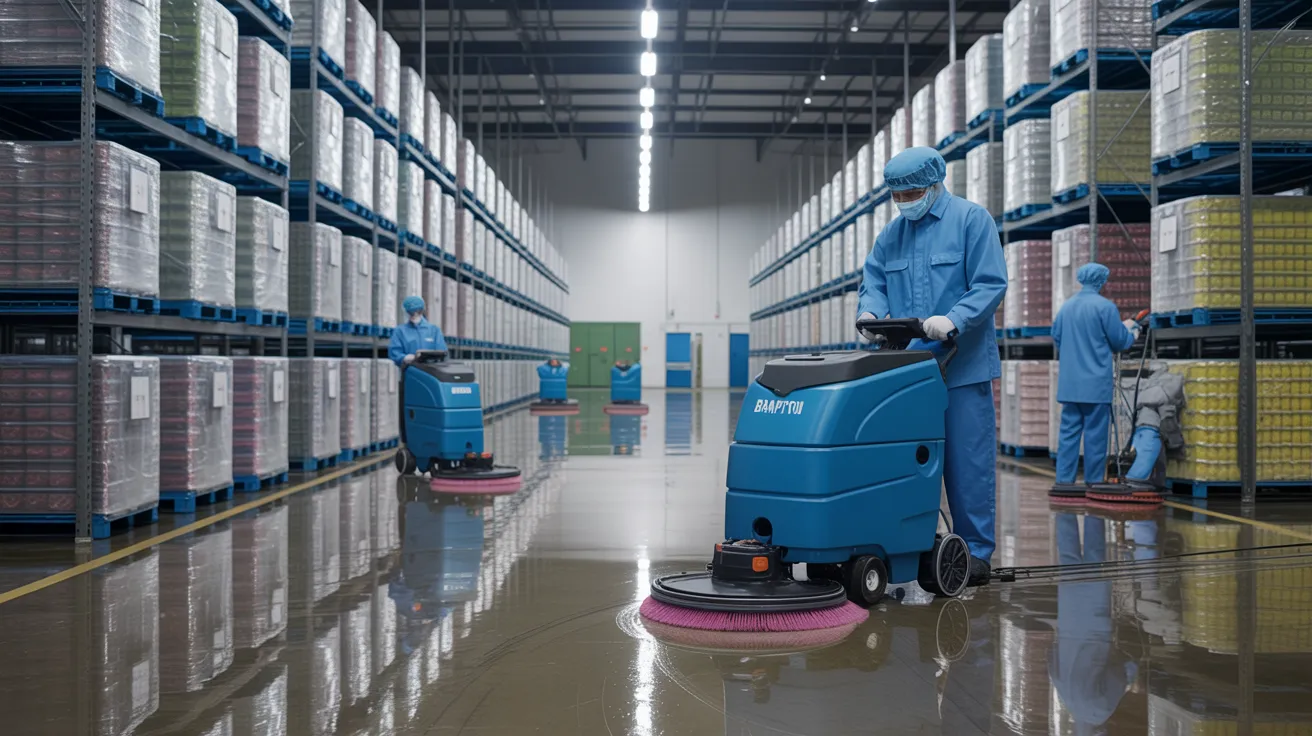
Floor care that is recorded should equally be anticipated. Technicians scrub and extract buildup from tile grout, ceramic surfaces, and vinyl floors, then apply appropriate drying controls so you can reduce slip incidents and maintain code-compliant conditions. They also handle entryways where moisture and debris migrate indoors.
Restroom cleaning involves sanitizing touchpoints, fixtures, partitions, dispensers, and waste containers, replenishing amenities and managing odor. They also service restaurant moprooms, where chemical storage, sink hygiene, and drainage conditions can affect sanitation compliance and staff safety daily.
The Importance of Food Safety Cleaning in Brampton
To adhere to health code requirements and pass inspections, Brampton facilities must maintain appropriate cleaning protocols. You also minimize bacterial spread through proper cleaning of food-preparation surfaces, appliances, and frequently-touched items. Most importantly, you help protect public health by lowering the risk of foodborne illness in your facility.
Health Code Compliance
Because Brampton food businesses operate under rigorous sanitary regulations, food safety cleaning directly determines your ability to meet health code requirements, defend customers, and prevent enforcement action. You must maintain clean food preparation areas, verifiable cleaning logs, correct sanitizer application, and traceable training practices that correspond to municipal and provincial inspection expectations.
Inspectors assess your operation to determine that your cleaning program maintains secure product handling, tool sterilization, trash control, and washroom maintenance.
Cross-Contamination Avoidance
Following health code standards depends on your skill in stopping cross-contamination in routine food work and sanitation. You should isolate raw items from prepared foods, sanitize prep surfaces between tasks, and store chemicals away from food-contact items. Well-defined guidelines decrease contamination chances and promote steady regulatory adherence.
Implementing allergen separation helps keep priority allergens from contacting communal work zones, bins, or devices. Deploy dedicated cutting boards, color-coded tools, and strict utensil labeling so staff don't mix items during preparation or service. Enforce hand hygiene following raw meat, seafood, eggs, or allergen-containing products. Replace wiping cloths regularly, and validate disinfectant levels using test strips. When you train staff to follow these controls per shift, you establish a more hygienic, safer workplace that satisfies Brampton's food safety needs regularly.
Public Health Safeguarding
If food safety cleaning declines, you don't merely face potential inspection issues—you amplify the risk of pathogenic contamination affecting customers, staff, and the broader Brampton area. You also undermine your responsibility in protecting public health, especially in high-traffic food premises where pathogens travel quickly through surfaces, equipment, and touchpoints.
You must implement cleaning procedures that eliminate contaminants, properly disinfect, and verify results. This involves maintaining contact periods, utilizing authorized sanitizers, recording schedules, and training employees to fulfill compliance standards. These actions support pathogen control associated resource by suppressing pathogens before contaminating food or hands. In Brampton, effective cleaning shields vulnerable populations, curtails outbreak likelihood, and demonstrates accountability. When you maintain standards, you exceed requirements—you substantially reduce risk and advance safer food handling throughout the city.
In What Ways Does Cleaning Help Achieve Food Safety Compliance?
Following thorough cleaning protocols bolsters food safety compliance by decreasing contamination threats, managing pathogen expansion, and keeping your facility aligned with sanitation requirements under HACCP-based programs and public health regulations. You ensure that product-contact areas remain visibly clean and microbiologically controlled, enabling documented preventive controls and inspection readiness.
Strategic cleaning practices also enhance allergen control by eliminating residues that can lead to undeclared allergen exposure.
When Should You Schedule Commercial Cleaning?
Routines for cleaning work most effectively when developed based on risk assessment, output volume, and compliance standards instead of just a set calendar.
special events, catering functions, or public functions need to plan cleaning both [[before and following for successful event turnaround. Record timeframes, verify completion, and revise plans when hazards, volumes, or regulations evolve
How Do You Choose Brampton Cleaning Experts?
Evaluate providers first by food-safe sanitation requirements rather than cost. You must ensure each provider understands CFIA, public health, and HACCP requirements for your business. Request insurance proof, WHMIS compliance, staff training documentation, and supervision methods. Check technician awareness of cross-contamination risks, chemical handling, and documented sanitation practices.
Additionally, you need to evaluate operational reliability and accountability. Obtain references from Brampton food operations, then review service speed, corrective-action procedures, and communication standards. Verify the company supports supplier audits and can deliver inspection-ready documentation when inspectors or external parties need proof. Verify equipment upkeep, color-coded equipment are applied correctly, and location-specific dangers are identified. A qualified provider ensures compliance, product integrity, and your reputation.
What does a Food Safety Cleaning Plan encompass?
Develop a written strategy that clarifies every sanitation task, standard, and responsibility before production begins. You should outline cleaning frequencies, approved chemicals, dilution rates, contact times, tools, and verification methods for each zone, surface, and piece of equipment. Incorporate pre-operational inspections, corrective actions, and employee training requirements.
Your framework should also include cross-contamination controls, waste handling, pest-prevention measures, and documented schedules for bathrooms, drainage, ground surfaces, and food-handling zones. Clarify how you'll separate raw and ready-to-eat processes, support ingredient tracking, and maintain accurate allergen labeling through validated cleaning between product changes. You should establish accountability, preserve signed records, and check results against regulatory standards, HACCP controls, and customer requirements. When gaps appear, revise procedures immediately and retrain staff.
Regular Posed Questions
Can cleaning services accommodate nighttime operations in Brampton facilities?
Yes, you can arrange sanitation coverage to support nighttime operations in Brampton facilities. You'll organize overnight sanitation around production schedules, access controls, and personnel needs. Providers typically establish overnight logistics to reduce disruption, ensure compliance, and record finished work. You should confirm arrival timeframes, management, access protocols, and disposal methods before beginning service. If you operate controlled environments, you'll also need documentation that support inspections and compliance verification.
Can Brampton cleaning experts manage hazardous incidents?
Yes, you can find Brampton cleaning experts to offer hazard containment solutions. They handle hazard containment, assess risks, isolate affected areas, and start rapid decontamination to reduce exposure and business interruption. You should verify arrival timeframes, training certifications, PPE protocols, and disposal procedures. If your facility must meet health or food safety regulations, select a service that records events, maintains regulatory procedures, and enables compliance verification.
Are green disinfectants suitable for food preparation areas?
Yes, plant-based sanitizers can be appropriate for food-handling equipment if you choose disinfectants approved for food contact and meeting regulatory standards. You should validate contact duration, concentration levels, and rinse procedures before application. Many plant based formulas decrease toxic chemical contact, but you should gather evidence of effectiveness against target microorganisms. To maintain residue free surfaces, you should adhere to manufacturer instructions exactly and verify the disinfectant adheres to food industry regulations.
Do sanitation programs support seasonal shifts?
Without question, maintenance plans are highly adaptable for production fluctuations. Adjust intervals, labor allocation, disinfectants, and confirmation procedures to match production rhythms while preserving regulatory adherence. Decrease operational delays by planning sanitation around line changes, high demand periods, and usage cycles. Further modify written procedures, training, and facility monitoring to account for temporary risks, novel allergens, or higher contamination levels. Ongoing evaluations ensure the program efficient.
Will commercial cleaners train employees on hygiene best practices?
Indeed, commercial cleaning providers typically provide employee coaching on proper hygiene. Your staff obtains instruction on safe chemical application, contact times, cross-contamination prevention, equipment disassembly, and documentation. They generally adhere to training with HACCP, GMP, and CFIA or local public health criteria. Many perform sanitation audits to verify compliance, reveal issues, and strengthen improvement measures. This assists you to maintain consistent procedures, pass inspections, and reduce food safety risks each day.
Closing Remarks
Partnering with Brampton food safety and commercial cleaning professionals goes beyond tidying—it guarantees your operation meets inspection standards and your protocols are defensible. From kitchen areas to production zones, each cleaned area and organized section lessens contamination risk and avoids costly disruptions. By scheduling maintenance at suitable frequencies and implementing a thorough cleaning program, you protect your workforce, your customers, and your image. In a tightly controlled market, sanitary conditions are non-negotiable—they're critical to business success.